Why Does Your Irish Moss Powder Batch Keep Failing QC?
November 24, 2026
Verify your Irish Moss Powder before ordering. Learn why species and batch COAs matter when sourcing sea moss powder or extract for your brand.
I’ve been in the botanical sourcing game for over a decade, and if there’s one ingredient that consistently trips up buyers, it’s this one. Not because it’s complicated, but because the supply chain is flooded with lookalikes, and the naming conventions are a mess. You think you’re ordering one thing, and you end up with something that looks similar but performs completely differently in your formula.
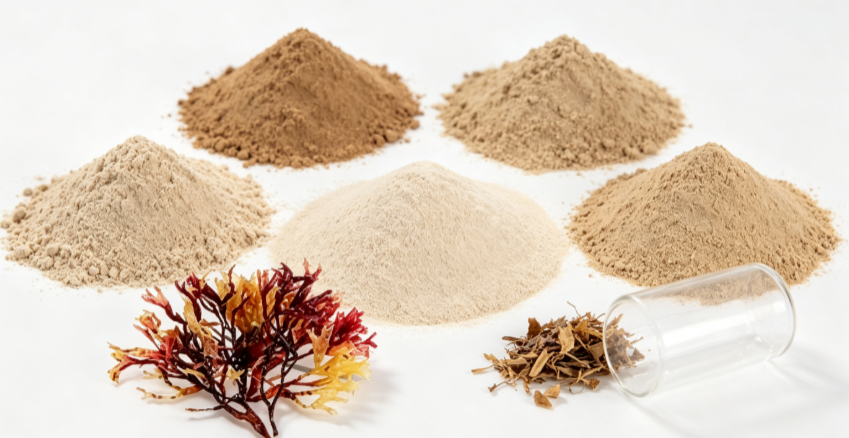
Let’s clear the air first. When you see “Irish Moss Powder” on a spec sheet, it should mean one specific species: Chondrus crispus. That’s the flat, fan-shaped red algae that grows on North Atlantic rocks. It’s the one that gels firmly, carries a mineral profile rich in iodine, and has that briny-but-clean taste. But here’s the kicker—most of what’s sold as sea moss powder today is actually Gracilaria or Eucheuma from warmer waters. Those are thinner, milder, and they set softer. Both are edible, but they are not interchangeable if your product relies on gel strength or consistent mineral content.
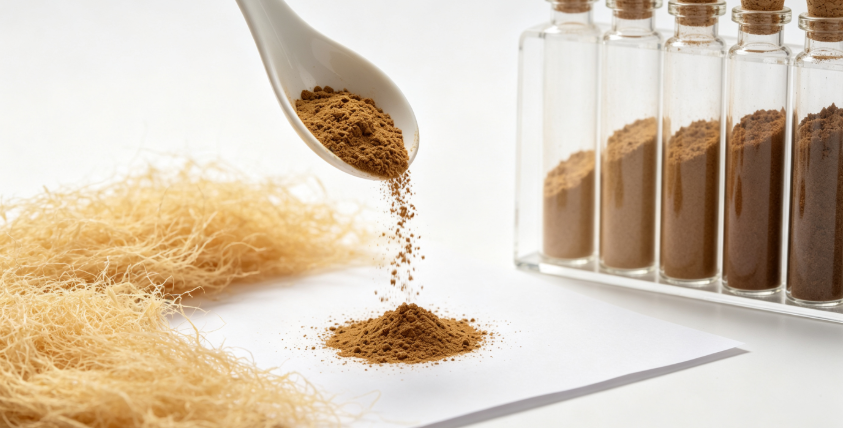
The powder-versus-extract decision is where I see the most expensive mistakes. A straight powder is the whole dried plant, ground up. You get the fiber, the natural carrageenan, the minerals—everything in its raw ratios. It’s great for smoothie blends, vegan dessert bases, or any product where you want that whole-food story. But if you’re making capsules, gummies, or a clear beverage, you probably need a concentrated pull—something like an irish sea moss extract that’s been standardized to a specific mineral or polysaccharide level. The extract strips away the bulk and the ocean smell, leaving you with a consistent dose per gram. Ordering powder when you need extract (or vice versa) is how you end up with a gritty capsule or a gummy that never sets.
So how do you avoid getting burned? Treat the COA like a first date—ask the awkward questions. What’s the Latin name? Where was it harvested? Was it wild or pool-grown? (Pool-grown material looks suspiciously uniform and loses most of its marine character.) What’s the iodine range per serving? Are heavy metals like arsenic, cadmium, and lead within safe limits? A real supplier answers these without blinking. A trader changes the subject or offers a discount to “skip the extra testing.”
If you’re buying irish moss powder bulk, the stakes are even higher. You’re not ordering a sample; you’re ordering a container. Ask for three consecutive batch reports, not one cherry-picked COA. Check the moisture content—anything above 8–10% means it’ll clump in storage. Confirm the mesh size matches your process; finer powder hydrates more evenly but costs more. And for the love of kelp, run your own third-party test on the first lot. A few hundred dollars in lab fees now beats a ten-thousand-dollar recall later.
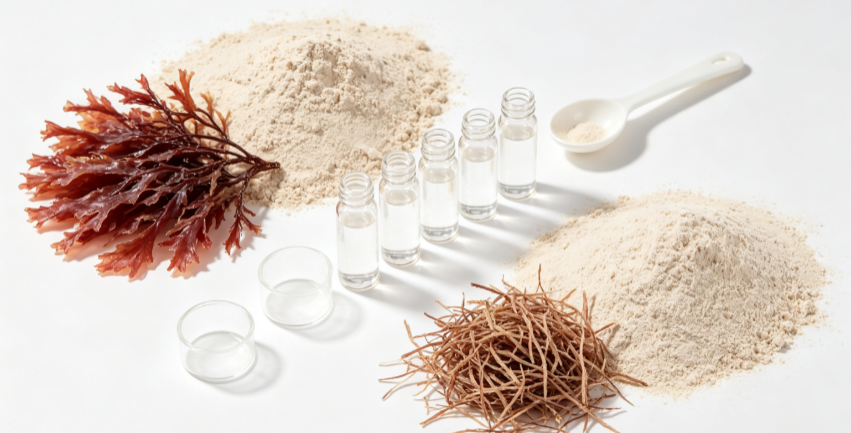
At the end of the day, the benefits everyone talks about—the minerals, the gelling, the “nature’s multivitamin” story—only hold up if the powder in your bottle is actually what you think it is. Whether you go with a whole-food powder or a concentrated extract, buy from someone who can trace it from the rock to the drum. That’s the difference between a product that works and a very expensive lesson.