Is the Irish Sea Moss Extract You Ordered Really Chondrus Crispus?
November 23, 2026
Verify your sea moss extract before shipment. Learn why species, drying method, and batch COAs matter when sourcing Irish sea moss powder from a real manufacturer.
Tom shipped a container back in March. The label said Irish Sea Moss. The COA said "red algae powder, wildcrafted, mineral-rich." Six weeks later his R&D lead called: the gel strength was wrong, the iodine reading was all over the place, and the lab's DNA test came back as Gracilaria, not Chondrus crispus. Nobody at the supplier seemed surprised. "Same family," they said. It isn't the same family, and Tom's customers noticed.
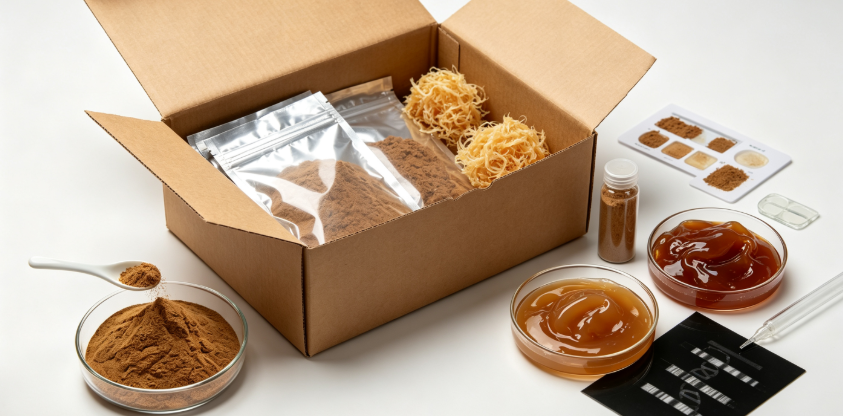
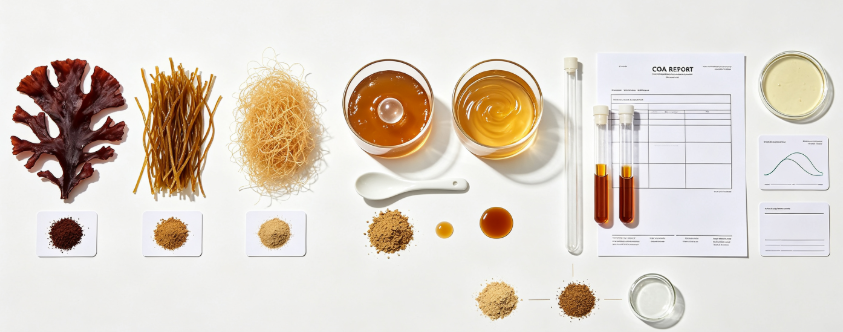
The mess starts with the names. "Sea moss" is a catch-all for several edible red seaweeds. The original Irish moss is Chondrus crispus, a flat, fan-shaped alga that grows in cold Atlantic waters off Ireland, Scotland, Canada, and New England. Most of what's sold today as sea moss is actually Gracilaria or Eucheuma cottonii from the Caribbean and Southeast Asia, thin and noodle-like, often sun-bleached gold and marketed as Jamaican sea moss . Both are legitimate ingredients, but they behave differently: Chondrus crispus runs higher in carrageenan and iodine and produces a thick, firm gel, while the warm-water varieties gel more smoothly and taste milder . If your formulation depends on gel strength or iodine consistency, species matters more than the flag on the listing.
That's why the first thing a serious buyer asks isn't "what's the price" but "what's the Latin name." A trustworthy sea moss extract supplier puts Chondrus crispus or the exact species on the COA, names the harvest waters, and includes third-party testing that goes beyond basic nutrition. Real testing covers heavy metals (seaweed absorbs what's in its environment, including arsenic, cadmium, and lead) , iodine levels per serving, and microbials. If the supplier sends a one-page spec with no species line and no metal panel, you're not buying an extract, you're buying hope.
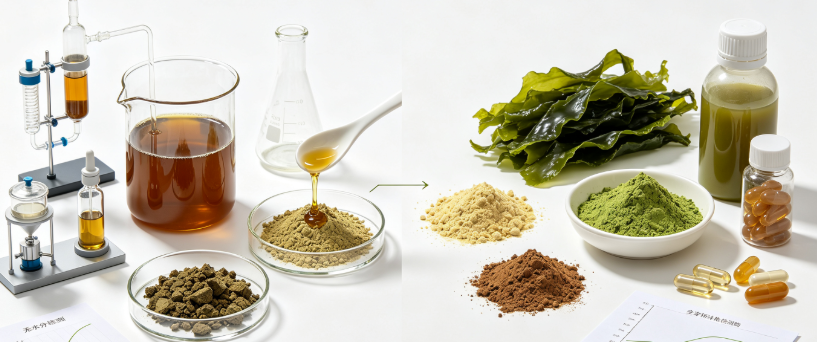
Processing is the next quiet variable. Heat breaks down delicate sulfated polysaccharides, so the better makers use low-temperature water extraction, membrane filtration to pull out salt and heavy metals, and vacuum evaporation or spray drying to turn the liquid into a free-flowing powder . Cheaper operations save money by skipping the filtration step and overdrying, which leaves you with a powder that clumps, smells off, and loses the very compounds your label talks about. When Tom audited his second supplier, the difference showed up on the moisture line: below 5% in the vacuum-dried batches, above 9% in the sun-dried ones. The powder that looked cheaper on paper cost him a reformulation.
Powders and extracts are not the same product either. Irish sea moss powder is the whole dried thallus, ground fine. It works for food blends, gels, and bulk-format supplements where you want the full mineral profile. Sea moss extract is concentrated: the actives are pulled out, standardized, and dried, giving you a consistent dose per gram and a smaller payload in capsules or tablets. Brands that sell irish sea moss powder benefits as a daily mineral boost usually want the whole powder; brands making capsules, gummies, or functional drinks usually want the extract. Ordering the wrong one is an expensive way to learn the difference.
The brands that hold their margins are the ones that treat the COA as a negotiation document, not a formality. Ask for three consecutive batch reports, not one cherry-picked sample. Check the species line, the iodine range, the metal panel, and the drying method. Request a small trial lot and run it through your own lab. A real supplier welcomes that kind of scrutiny because their process survives it. The ones that stall, deflect, or offer a discount to "skip the extra testing" are the ones Tom learned to walk away from.