How Do You Read a Bamboo Extract Spec Sheet Line by Line?
Pull three bamboo extract spec sheets from three suppliers and lay them side by side. All three say 70 percent silica. One says shoot, one says stem, one says leaf. One tests by gravimetry and another by UV. The powders look identical in the sample bags.
The headline matches. The paperwork underneath does not, and the small lines are the ones worth reading.
Plant Part and Species
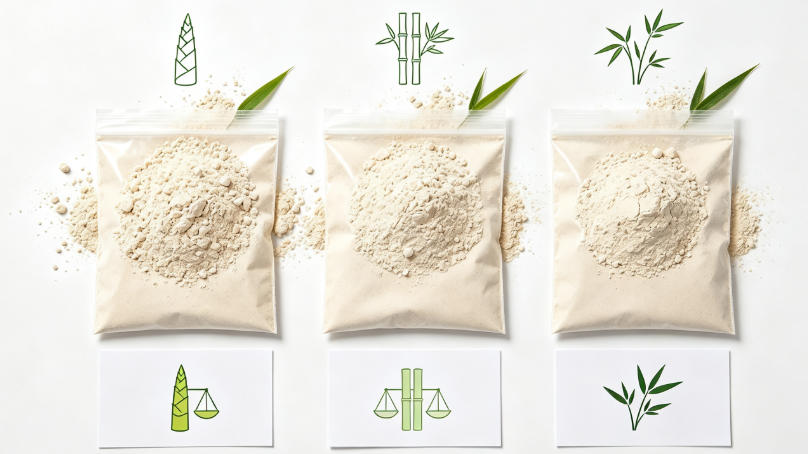
Bamboo is a huge grass family. Silica grades are usually made from the stems or shoots of Bambusa species such as Bambusa arundinacea and Bambusa vulgaris. Leaf extracts from species like Phyllostachys nigra are more often sold for their flavonoid fraction.
Some listings blur the words, so a product described as leaf can contain stem. Ask for the plant part and the Latin name in writing. Plain bamboo leaf powder is a different, simpler product. It is just the dried, milled leaf with no standardization, used in teas and food blends.
The Assay Method Behind the Silica Number
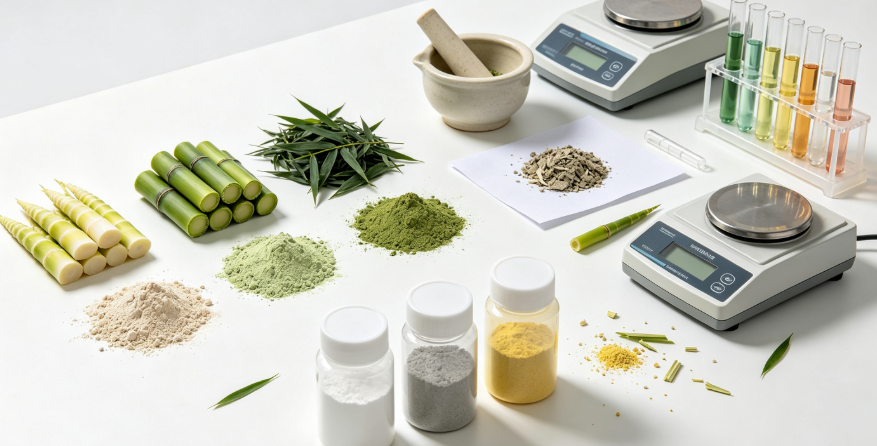
Seventy percent silica sounds like one fact. In practice it depends on the test. Gravimetry weighs the residue left after the sample is ashed. UV methods measure silicon compounds that react in a colorimetric test. The two do not always agree, so two powders that both say 70 percent can differ in real content.
Always ask which method was used, and ask for the ash value too. Some suppliers treat ash above 5 percent as a warning sign of impurities. A white, characteristic smelling powder is normal. A gray or yellow tint is worth a question.
Solvent, Carrier and Appearance
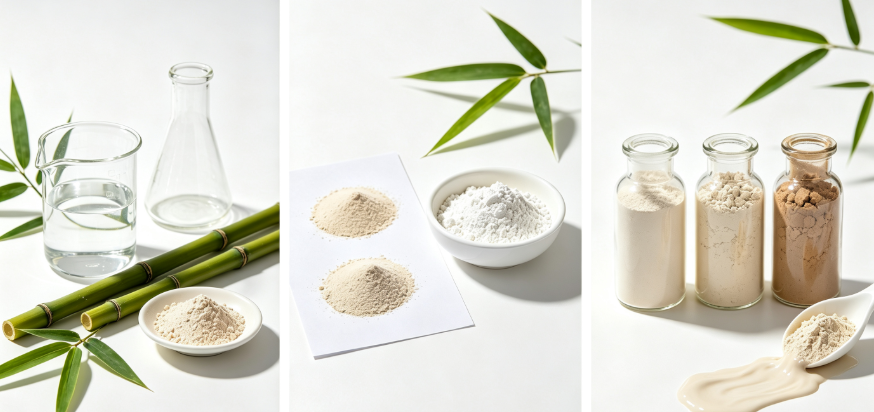
Water is the common extraction solvent. Water and ethanol are used for some leaf grades, and in those cases a residual solvent limit such as 0.05 percent should appear on the spec. Ask whether any carrier is added. Some grades state that none is used, and some do not say anything at all.
A bamboo extract powder should be fine, free flowing and consistent in shade from lot to lot. Variation in color usually points to a change in raw material or drying.
Flow, Mesh and the Paperwork Behind It
Mesh decides how the powder behaves in a machine. Capsule grades often pass 98 percent through 80 mesh. Blends can use coarser grades, such as 95 percent through 40 mesh. Bulk density can run from light and fluffy near 0.3 g per ml to heavier powders, so ask for both bulk and tapped density. Capsule fill weight depends on it.
Loss on drying of 5 to 10 percent or less is typical, and the powder picks up moisture, so foil lined or moisture proof packaging matters. Request heavy metals for lead, arsenic, cadmium and mercury per lot, plus microbial results. Shelf life of 24 to 36 months in sealed 25 kg drums is usual.
Where It Ends Up
Capsules and tablets are the main home, and bamboo silica supplements sit in many beauty and wellness ranges. Powder sachets, gummies and cosmetic formulas use it too. Check the use level against your fill weight before you commit.
Run a small trial lot, retain a sample, and compare every later shipment to it.
FAQ
1、Which plant part is used for silica grades?
Mostly stems or shoots of Bambusa species. Leaf extracts are usually sold for their flavonoid fraction.
2、Why do two 70 percent silica powders differ?
The assay method differs. Gravimetry and UV measure different things, so always ask which was used and request the ash value.
3、How long does the powder keep?
About two to three years in sealed, moisture proof packaging stored cool and dry.
If you want bamboo extract with the assay method and ash data on paper, take a look at our premium bulk bamboo extract. We supply it with complete COA documentation and clearly defined product specifications. Sample requests and quotes are available directly from our sales team.