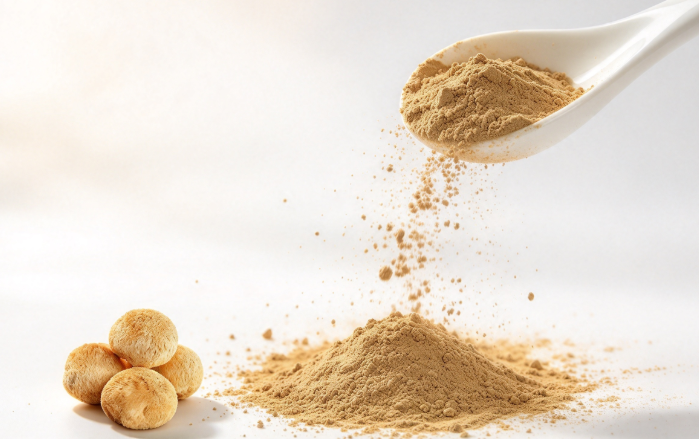
Is Your Maca Extract Powder Just Ground Root With a Ratio Label?
A bag arrives labeled maca extract powder. Light beige, bland, free flowing, 10:1 printed on the spec. It tastes like flour, and the HPLC line is blank. What you may be holding is ground root with a ratio on it.
It happens more often than the trade admits, and a few questions stop it.
Is Gelatinized Maca Powder or Maca Root Extract the Right Fit?
Three different products sit under one name.
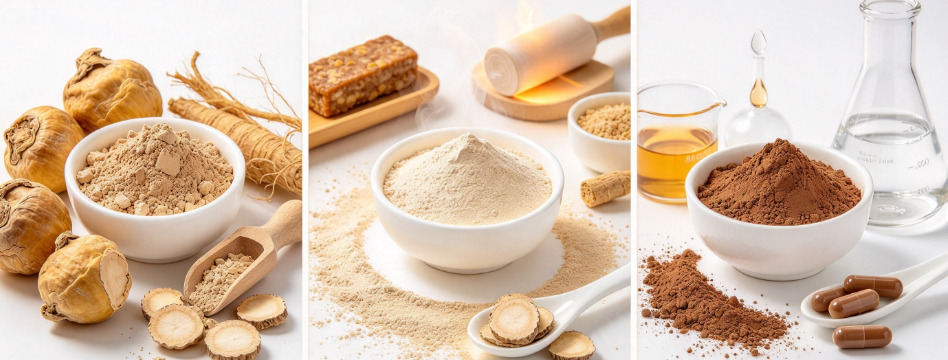
Raw maca is the dried, ground root. All the native starch is still there, and the flavor is earthy and pungent.
Gelatinized maca powder is the same root with the starch pre cooked, usually by heat or extrusion. Nothing is added. The taste is milder and it blends into food more easily, which is why bakery, bars and smoothie mixes prefer it.
Maca root extract is made with water or an ethanol and water mix, concentrated and spray dried. It is finer, darker and sold on a ratio or on a marker. Each form has its own price, so never compare them on the kilo price alone.
Does a Ratio Label Prove Anything?
Not much. A maca extract 10:1 grade means ten parts of root went into one part of extract. It says nothing about how much of the useful compounds ended up in the bag.
The marker to ask about is macamides, measured by HPLC. Grades at 0.6 percent and 1 percent are common. If a supplier can only give you a ratio, ask for the assay. A very pale, starchy powder sold as an extract deserves a second look, and so does any carrier you were not told about.
Does Root Color Matter for Your Product?
Yellow, red and black roots come from the same harvest and are sorted afterwards. Yellow is the most common and the best value for food. Black is the rarest and costs the most.
If your label names a color, the spec should name it too. Origin also changes cost and flavor, with Peruvian highlands and Chinese cultivation both in the market. Ask for origin in writing.

What Should the Spec Sheet Show?
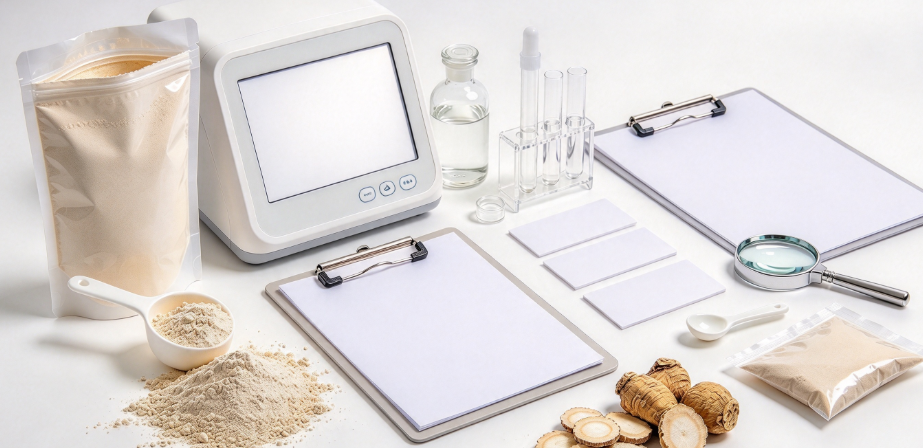
Botanical name Lepidium meyenii, root, the process used, the ratio and the macamide assay. Then mesh size (80 mesh is common), moisture, ash, bulk density, heavy metals and microbial results per lot.
Foil lined packaging matters, since the powder picks up humidity. Taste a sample at your intended dose before ordering volume. Higher ratios bring a stronger earthy note, and that can be a real problem in drinks.
If you want maca with the assay results to back the label, take a look at our premium bulk maca extract powder. We supply it with complete COA documentation and clearly defined product specifications. Sample requests and quotes are available directly from our sales team.