What Does Pure Soy Protein Powder Really Mean on a Spec Sheet?
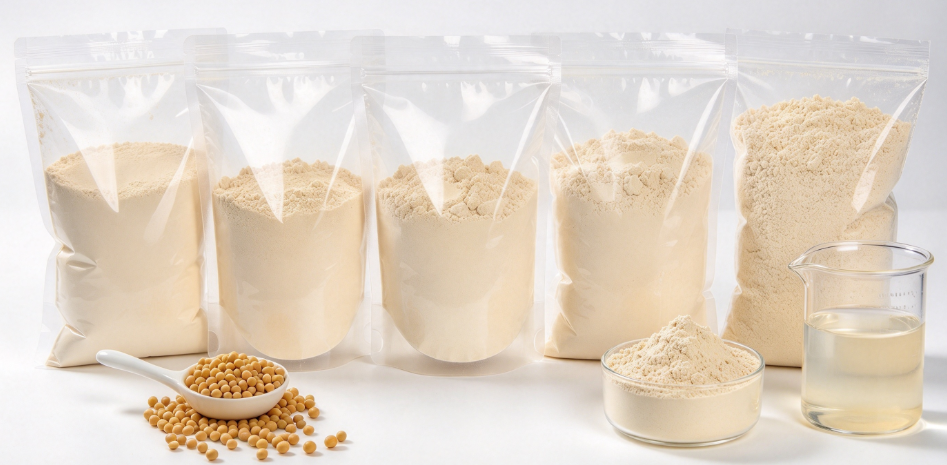
Open five bags of pure soy protein powder and you get five different experiences. One mixes smooth, one clumps, one tastes like cooked beans. Every label says the same thing: one ingredient.
The word pure does less work than buyers think. What sits behind it is processing, and that is where the differences start.
Is Soy Protein Isolate Powder Really Just One Ingredient?
Mostly yes, but one ingredient does not mean one quality. Protein content is the first number, and good grades reach 90 percent or higher on a dry basis. The rest is moisture, ash and a little fat.
Some producers add a small amount of lecithin so the powder wets faster. That is a legitimate choice, yet it belongs on the spec sheet, not in a surprise discovery. If your own label claims a single ingredient, get that confirmed in writing.
Why Does Unflavored Soy Protein Powder Taste Different?
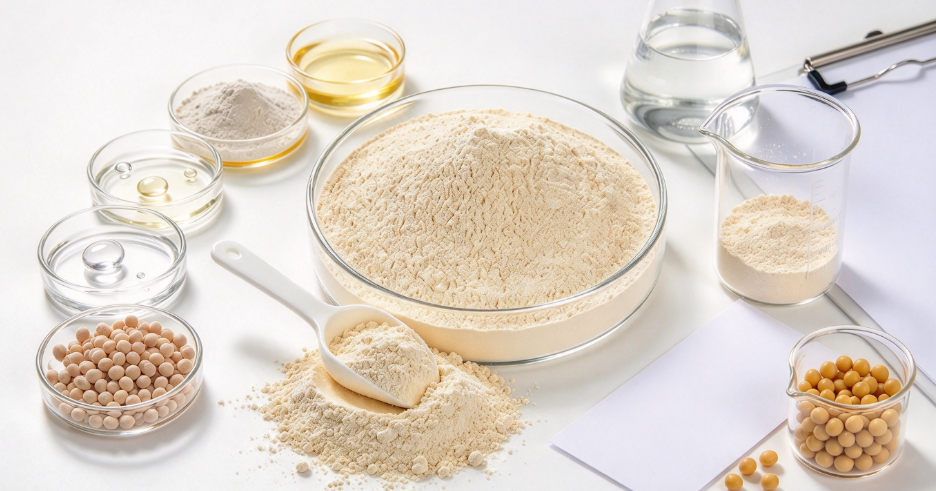
Beany notes come from the raw bean and from how hard it was processed. Extra washing and a second isolation step strip most of it out, which is why cleaner tasting grades cost more.
Texture comes down to particle size and solubility. A coarse powder feels gritty in a shake, while a finer, more soluble grade disperses easily.
Use matters too. Unflavored soy suits baking, bars, meat alternatives and sauces better than a thin water shake. A formulator who plans around that saves a lot of rework.
What Should a Non GMO Soy Protein Powder Come With?
Paperwork. A non GMO claim needs identity preserved sourcing records and test results by lot, not just a line on the label.
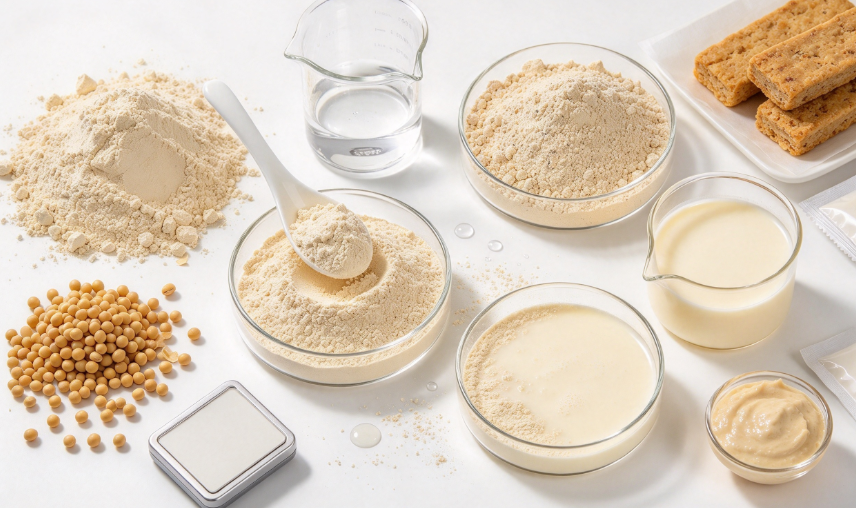
Beyond that, ask for protein percentage, moisture, mesh size, bulk density, heavy metals and microbial results per lot. Soy is a major allergen, so the allergen statement for the production line belongs in the file too.
Packaging deserves a look. Soy isolate takes on humidity and cakes, so moisture proof bags are not optional.
Mix a trial batch in your own base before placing a volume order. Taste and texture show up fast.
FAQ
What protein percentage is normal?
Quality isolate grades reach 90 percent or higher on a dry basis.
Does soy protein dissolve well in water?
Fine, soluble grades mix easily. Coarse grades can clump and feel gritty, so request the particle size.
Is it suitable for baking and sauces?
Yes. Its neutral flavor and water holding properties suit baked goods, bars, meat alternatives and sauces.
If you need soy protein with a clear spec sheet, take a look at our premium bulk pure soy protein powder. We supply it with complete COA documentation and clearly defined product specifications. Sample requests and quotes are available directly from our sales team.