Which Type of Chamomile Extract Fits Your Product Best?
Say chamomile extract to five buyers and you get five different products in mind. One pictures tea bags. One pictures a pale yellow powder for capsules. One wants a high apigenin grade for a specialty blend. A fourth is making a cream, and the fifth is flavoring a drink.
All five use the same name. Their spec sheets could hardly be more different.
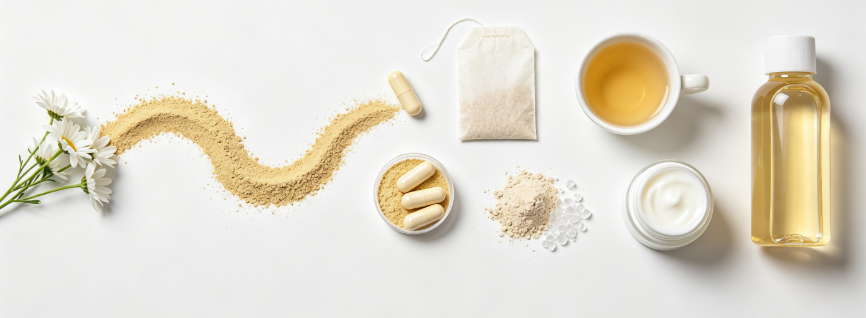
Three Forms Sold Under One Name
| Form | What it is | Typical spec | Best for |
|---|---|---|---|
| Flower powder | Dried flower heads, milled | No standardization, aroma kept | Teas, bakery, seasoning |
| Ratio extract | Flowers extracted and concentrated | 4:1 or 10:1 | Capsules, instant drinks, general blends |
| Standardized extract | Concentrated to a marker | Apigenin 0.3 to 1.2 percent, purified grades far higher | Capsules, tablets, cosmetic actives |
Flower powder keeps the natural aroma, which is why it stays the first choice for teas and flavor work. Chamomile powder bulk orders are mostly milled flower heads, so ask about sieve size and make sure stems are not in the blend.
A ratio such as 10:1 only says how much flower went into one part of extract. It does not say how much of any compound ended up in the bag. If a number on the label matters to your customer, buy on the assay, not the ratio.
German Chamomile Is the Standard Source
The usual plant is Matricaria chamomilla, also written recutita, known as German chamomile. Roman chamomile, Chamaemelum nobile, is a different plant with different chemistry, and it should not sit under the same line on a spec sheet.
The part used is the flower head. Stems and leaves dilute the powder, so the paperwork should say flower. Harvest happens in summer when the flowers are fully open, and the main origins are Egypt, Germany and other parts of Europe. Flavor and color shift a little between them.
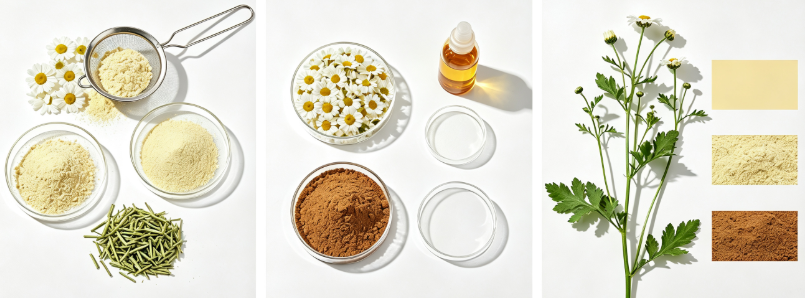
How the Extract Is Made Changes the Powder
A chamomile flower extract starts with water or an ethanol and water mix. Water only extraction is common for tea style and food grades. The ethanol mix pulls more of the flavonoid fraction, including apigenin. The solvent should be named on the spec, with a residual solvent result per lot.
The liquid is then filtered, concentrated and dried. A chamomile extract powder is usually yellow to brown and fine, and some grades carry a little maltodextrin as a drying aid. Ask for the carrier and its percentage so you know what you are paying for.
Where Each Grade Is Used
Tea blends and instant drinks use flower powder or a 4:1 ratio extract for aroma and mild flavor. Bakery and confectionery use it the same way, in small amounts.
Capsules and tablets lean on apigenin standardized grades, since the label can then name a number. Cosmetic formulators put chamomile in creams, lotions, shampoos and bath products, where a soft, soothing feel and a stable color matter. Cosmetic grade needs tight microbial limits and consistent shade from lot to lot.
Chamomile sits in the daisy family, which matters to some customers with plant sensitivities. Leave room on the label for a statement where your market requires one.
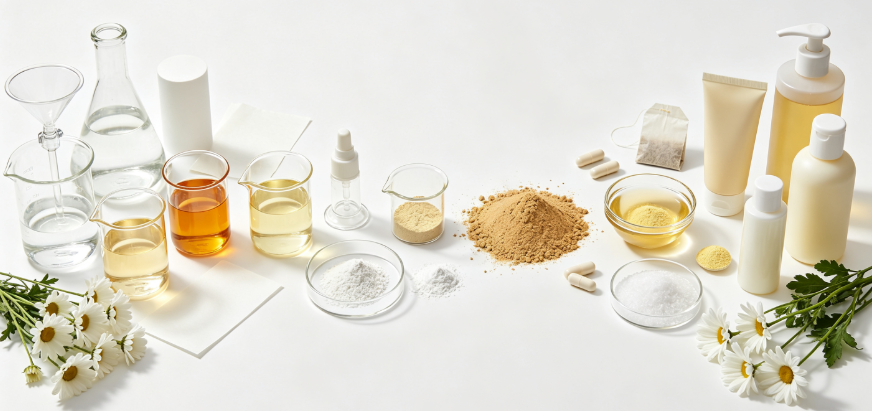
What to Put in the Purchase Order
Botanical name and plant part in writing. Then the grade lines: ratio or apigenin by HPLC, the solvent and its residual result, mesh size (80 mesh is common), moisture, ash and bulk density.
Add heavy metals for lead, arsenic, cadmium and mercury per lot, plus microbial and pesticide results. Packaging should be a lined 25 kg drum or sealed bag, light blocking and dry. Two years of shelf life is typical when stored sealed in a cool room.
Order a small trial lot, check color and aroma, then keep a retained sample of every lot after that.
FAQ
1、What apigenin level is common?
Many supplement grades sit between 0.3 and 1.2 percent by HPLC, with purified grades much higher.
2、Is German chamomile the same as Roman chamomile?
No. German chamomile is Matricaria chamomilla. Roman chamomile is Chamaemelum nobile, a different plant with different chemistry.
3、How should the powder be stored?
Sealed, light blocking packaging in a cool dry place. Shelf life is about two years when stored correctly.
If you want chamomile with the paperwork matched to your grade, take a look at our premium bulk chamomile extract. We supply it with complete COA documentation and clearly defined product specifications. Sample requests and quotes are available directly from our sales team.