What Do You Actually Mean When You Ask for Chili Pepper Extract?
Every few weeks the same message lands in our inbox: “Hi, I need chili pepper extract, please send a quote.” We reply with questions before we reply with a price, and some buyers find that annoying. Then they read the questions and understand why.
Chili extract can mean a bag of ground pepper. It can also mean a dark, sticky oleoresin that is hundreds of times hotter. Here is how the conversation usually goes.
First We Ask How Hot It Needs to Be
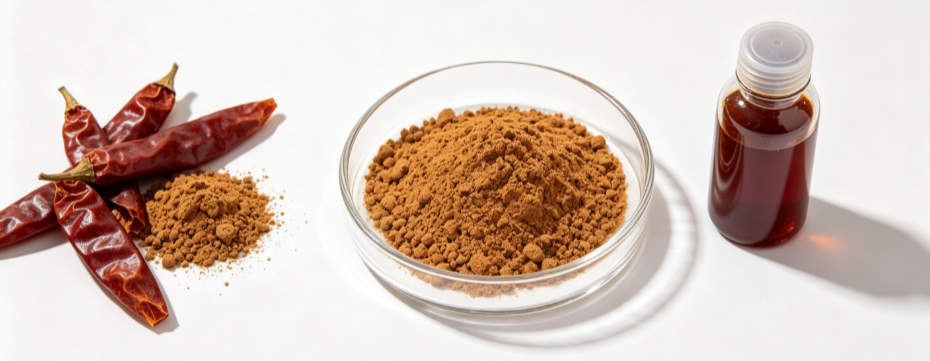
Heat is quoted in Scoville units, though in a lab it really comes from the capsaicinoid number by HPLC. Ancho sits around 1,000 to 2,000. Cayenne runs 30,000 to 50,000. Habanero can pass 100,000. Oleoresin grades start near 100,000 and climb to a million or more.
If your sauce needs a gentle warmth, plain powder is plenty. If you want heat from a tiny dose, in a snack coating or a seasoning stick, oleoresin is the tool, but you have to disperse it on a carrier like salt or dextrose, and people always underestimate how strong it is. Test on a bench scale before you scale up.
Then We Ask: Heat, Color or Flavor?
These are three different jobs, and one pepper rarely does all three.
Color is measured as an ASTA value. Paprika types carry lots of color with almost no heat. A mild everyday chili pepper powder might spec ASTA 50 minimum with 700 to 3,000 Scoville, while hotter cayenne grades trade color for punch.
Flavor is where ancho chile pepper powder shines. It is mild, a little smoky, with a raisin like sweetness, and it goes into stews, marinades, rubs and, surprisingly, chocolate desserts. Ancho is for taste first and heat a distant second.
Next, What Form Fits Your Line?
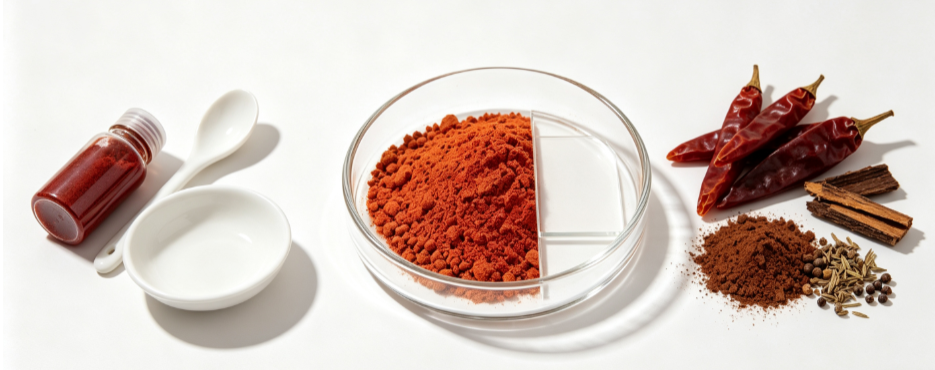
Powder is the easy one. Mesh around 80 to 100 suits blends, and rubs often want a coarser grind, for example 95 percent through a US 20 sieve. Bulk chili pepper flakes win on looks, which is why pizza and snack makers like them, but flake size and seed content change both the heat and the appearance from lot to lot.
Oleoresin is the precise option and the fussy one. It needs good mixing and a carrier, and it can stain equipment. Each form has its own headaches, so choose the one your plant can actually handle.
The Boring Part That Saves You Money
Moisture should sit below 10 percent, and some specs allow up to 12. Salmonella and E. coli must be absent. Ask for aflatoxin and pesticide results per lot.
One more thing most buyers do not know to ask about: illegal dyes. Chili products have a history of adulteration, so a test for them is reasonable and any serious supplier will not flinch.
Color fades in light and humidity makes powder cake, so it should travel in moisture proof, lined bags and live somewhere cool and dark. Shelf life of up to 24 months is realistic when you do that. Always run a sample on your own line before placing a volume order.
FAQ
1、Is chili pepper extract the same as chili powder?
No. Powder is dried, ground pepper. Extract, often oleoresin, is a concentrated liquid or powder sold by heat level.
2、What does ASTA color value mean?
It measures extractable red pigment. A higher value means stronger natural color in the finished product.
3、How should chili powder be stored?
Sealed, moisture proof bags in a cool, dark place. Light and humidity fade the color and cake the powder.
If you’re not sure which grade fits, tell us what you’re making and we’ll point you to the right heat and color. You can also look at our premium bulk chili pepper extract. We supply it with complete COA documentation and clearly defined product specifications. Sample requests and quotes are available directly from our sales team.