Which Green Tea Extract L-Theanine Do You Actually Need?
Key takeaways
- The name covers three different products: a theanine standardized extract, an EGCG powder with theanine in it, and a blend you mix yourself.
- Natural theanine from tea costs far more than the chemically or enzymatically made kind, so ask which one the spec describes.
- Always ask for L-theanine by HPLC, and for caffeine and the carrier percentage.
Send a quote request for Green Tea Extract L-Theanine and you may get three replies that describe three different powders. All three are correct for their own definition, and only one fits your product. Here is how to sort them.
Type 1: Green Tea Extract Standardized to L-Theanine
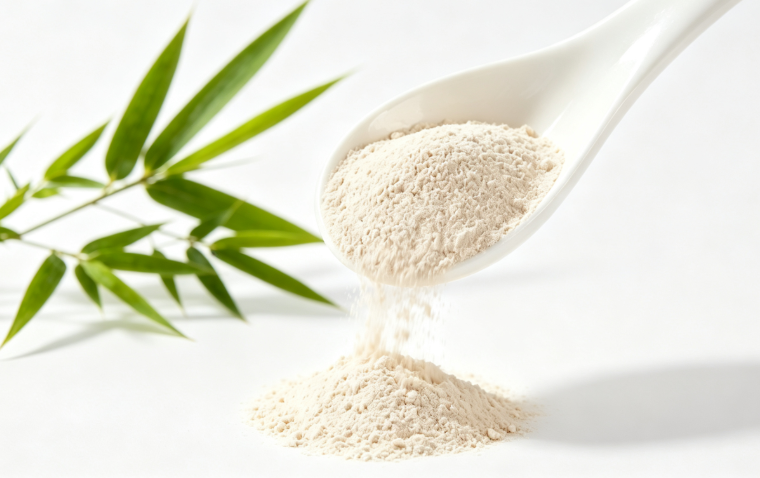
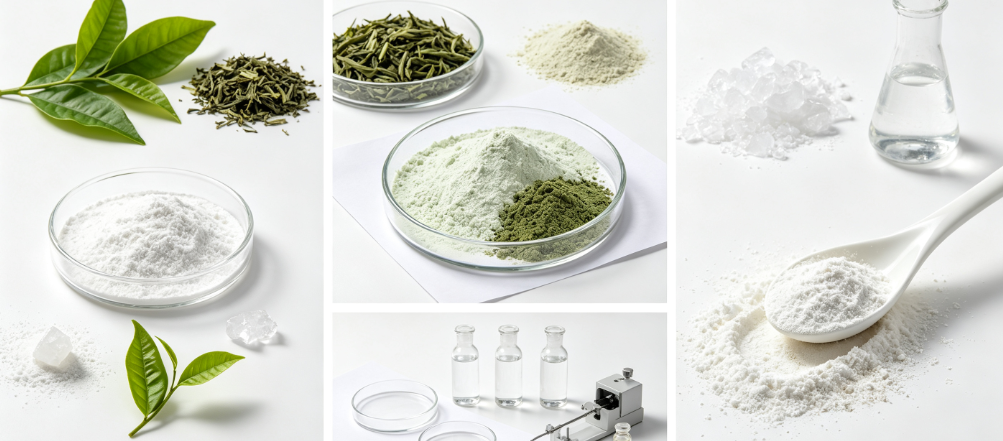
This is the natural, tea derived theanine. It is sold anywhere from 10 percent up to 98 percent L-theanine by HPLC. Low grades are brownish yellow powders with plenty of tea matrix. High grades are white, fine crystalline powders that dissolve in water.
If you want a simple, clean label, an L-theanine extract at 98 percent is the grade to look at. Just watch the price. Natural theanine costs far more than the compound kind, which is why much of the market uses the cheaper one. If your label says natural or from tea, get that in writing.
Type 2: A Green Tea Extract Powder With EGCG and Theanine
Here the base is a tea extract standardized for EGCG, with theanine in the mix. A typical sheet reads EGCG 50 percent minimum, L-theanine 20 percent minimum, caffeine under 1 percent, an extraction ratio near 20:1, ethanol and water as the solvent, and a small maltodextrin carrier of 1 to 10 percent.
Ask for both assays by HPLC, plus caffeine and the carrier percentage. A green tea extract powder like this looks brown yellow and flows differently from a pure white theanine powder, so run a trial fill before you finalize a label dose.
Type 3: A Blend You Make Yourself
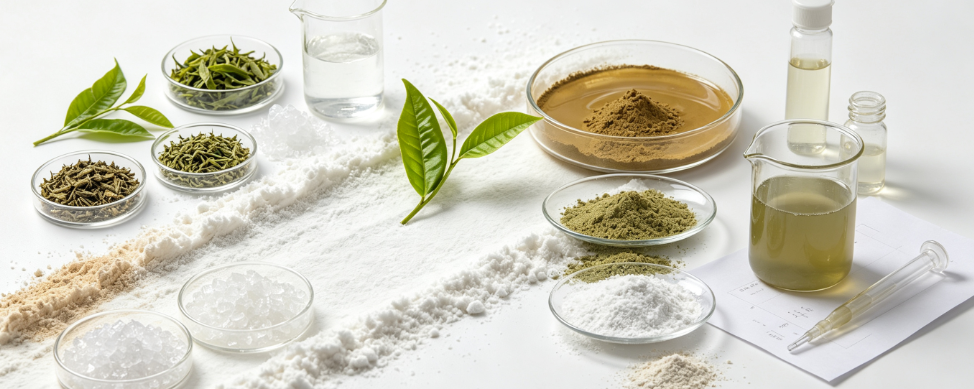
Some brands skip the combined grade and buy two ingredients, a green tea extract supplement base and a pure L-theanine powder. You control each dose, and you can change one without redoing the other.
The trade off is more paperwork and more work. You get two COAs, two lots and a blending step. A white crystalline powder and a brown extract differ in density and flow, so blend uniformity needs checking, especially in capsule filling.
A Quick Spec Guide
- L-theanine by HPLC, with the percentage.
- EGCG or polyphenols, with the method named, since UV and HPLC give different readings.
- Caffeine content, especially if you need a low caffeine claim.
- Extraction solvent and the residual solvent result.
- Pesticide residues and heavy metals per lot. Tea leaf can carry both.
- Microbial results, moisture and mesh size.
- Packaging that is sealed, moisture proof and light blocking. Two years of shelf life is typical.
Order a small sample and check solubility and color in your own base before you commit to volume.
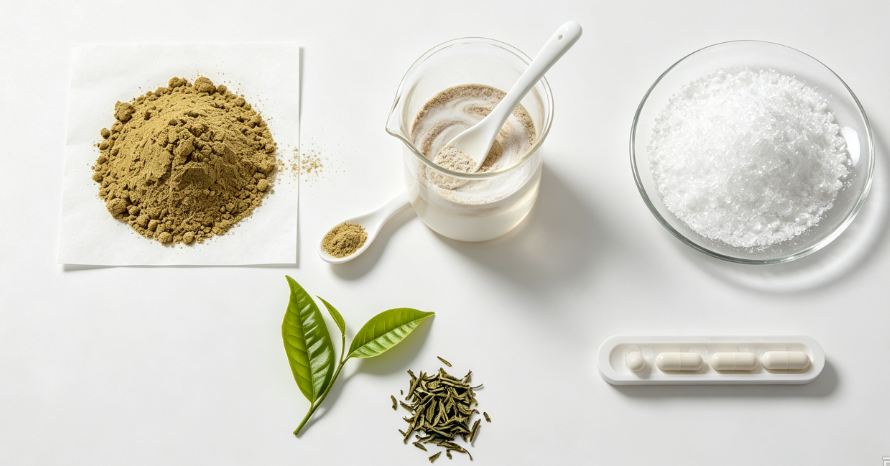
If you want to compare grades side by side, send us your target dose and we’ll suggest a spec. You can start with our premium bulk green tea extract L-theanine. We supply it with complete COA documentation and clearly defined product specifications. Sample requests and quotes are available directly from our sales team.