What Should You Know Before Buying Magnolia Officinalis Extract?
Key takeaways
- Grades run from 2 percent to 98 percent total honokiol and magnolol, so two quotes are rarely comparable.
- Ask for honokiol and magnolol listed separately by HPLC, not only the total.
- The extract is hardly soluble in water, so plan for capsules, tablets or oil based systems.
A quote for Magnolia officinalis extract can say 2 percent. The next one says 90 and a third says 98. All three are correct, because they describe different products. Here is how to read them, and what we would check before placing an order.
What the Grade Numbers Actually Mean
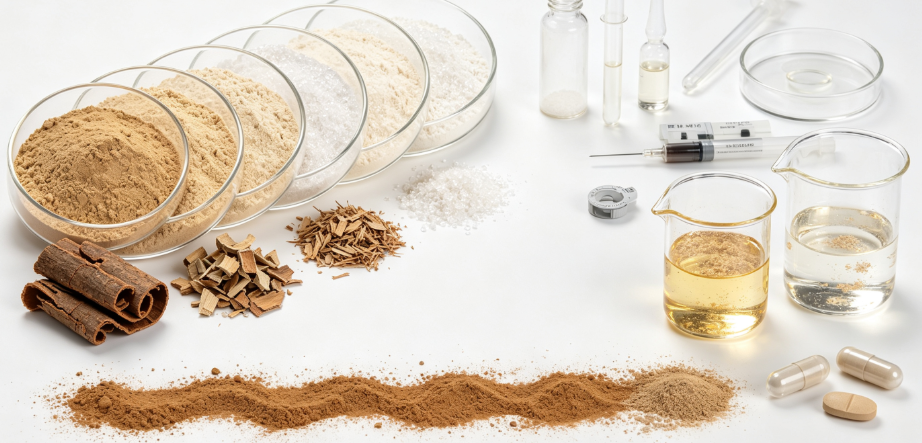
| Grade | What it is | Where it fits |
|---|---|---|
| 2% | Whole bark extract, low marker level | Cost sensitive blends |
| 50% | Mid standardized extract | Capsules, general supplements |
| 90% | High purity total honokiol and magnolol | Premium supplements, cosmetic actives |
| 98% | Isolated single compound | Premium and research formulas |
A magnolia bark extract powder is usually made by ethanol, or water and ethanol, extraction of dried bark, then purified to a set marker level. Color moves from light brown at low grades toward off white at high grades. That is a clue, not proof, so rely on the assay.
Honokiol, Magnolol and the Ratio Between Them
Total honokiol plus magnolol tells you the purity of the active group. It does not tell you the mix. Natural bark often gives more magnolol than honokiol, around 2 to 1 in some grades, though it varies with the process.
Some buyers want a specific ratio and others want an isolate. Either way, ask for each compound separately by HPLC. A magnolia officinalis bark extract that shows only a total on its COA hides the mix.
Why Bark Identity Matters
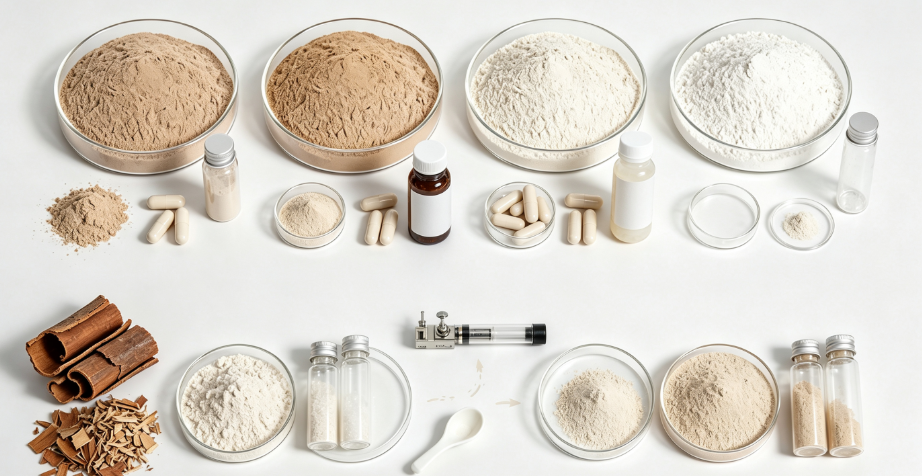
The useful material is the bark of Magnolia officinalis, known in the herbal trade as hou po. Flower buds, fruit and ornamental magnolias such as Magnolia grandiflora carry different chemistry. We have seen listings that mix Latin names and plant parts on the same page.
Get the botanical name, Magnolia officinalis Rehder and Wilson, and the plant part, bark, in writing. Species and part should match on the COA, the spec sheet and your purchase order.
Handling, Solubility and Storage
The extract is hardly soluble in water. It dissolves in ethanol and some oils, so it suits capsules, tablets, softgels and oil based formulas better than clear drinks. If a drink is the plan, ask about dispersible grades before you order.
Typical specs include 98 percent through 80 mesh, moisture and ash each around 5 percent or less, and lower figures for the high purity grades. Store it sealed, cool, dry and away from light, in 25 kg drums. Two years of shelf life is normal.
For a magnolia officinalis supplement in capsules, run a trial fill. High purity grades can flow very differently from low grades.
What to Put in Your Purchase Order
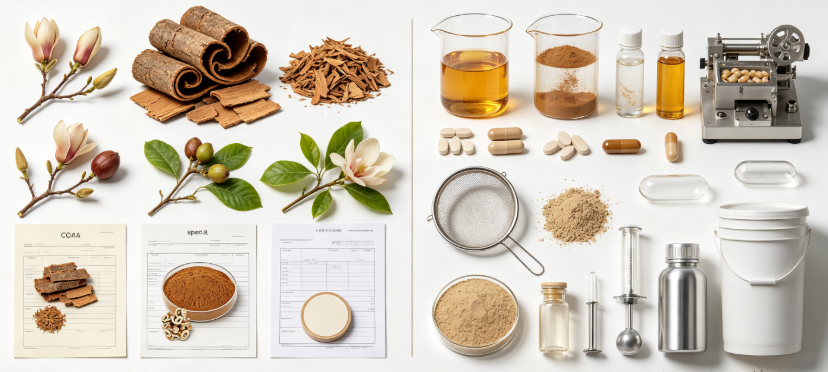
- Botanical name, plant part and grade.
- Honokiol and magnolol by HPLC, each listed.
- Extraction solvent and the residual solvent result.
- Heavy metals per lot, with lead at 2 ppm or less a common limit.
- Pesticide residues and microbial results, such as a total plate count of 1,000 cfu per g or less.
- Particle size and bulk density.
Start with a small sample and test it in your own system.
If you want to compare grades for your formula, tell us the target marker level and dosage form and we’ll suggest a spec. You can start with our premium bulk magnolia officinalis extract. We supply it with complete COA documentation and clearly defined product specifications. Sample requests and quotes are available directly from our sales team.