Is 98% Gypenosides on a Gynostemma Extract Label Too Good to Be True?
The three emails below are a composite of questions we get every month, lightly edited, with the names removed. The questions are real. The customer is not one person.
Email one: "Two quotes, both say 98%, one costs triple"
Buyer: Hi, I'm comparing two quotes for gynostemma extract. Both say 98 percent gypenosides. One is three times the price of the other. What am I missing?
Us: Probably two things, the test method and the plant part.
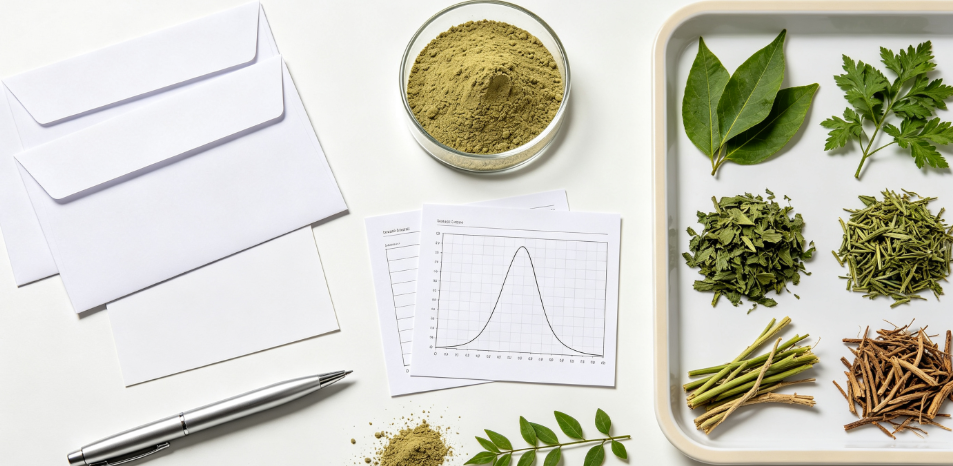
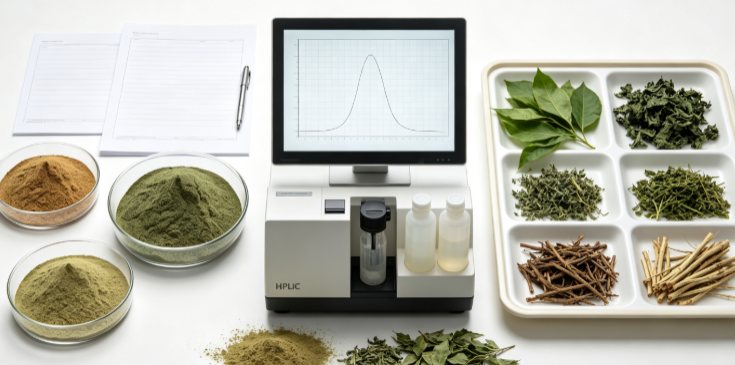
Start with the method. A 98 percent gypenoside figure is almost always measured by UV. UV adds up everything in the sample that reacts like a saponin, not only gypenosides. The same powder measured by HPLC can read much lower. Ask both suppliers for the HPLC chromatogram. If one of them can't produce it, that tells you something about the price gap.
Then the plant part. The listings we see for this one plant say leaf, aerial parts, whole plant, and even stem, leaf and root. Those are not the same raw material. The herb is also not covered in the 2020 edition of the Chinese Pharmacopoeia, and local standards don't agree on which part to use, so there is no single rulebook a supplier can point to. Treat 98 percent as a claim to verify, not a fact to accept.
Email two: "What do I actually put on the purchase order?"
Buyer: Fine. So what do I write on the PO?
Us: Here is the short version.
- The botanical name, Gynostemma pentaphyllum (Thunb.) Makino, and the plant part in writing.
- Gypenosides as a percentage, with the method named next to the number.
- The extraction solvent. Ethanol and water is common, followed by spray drying.
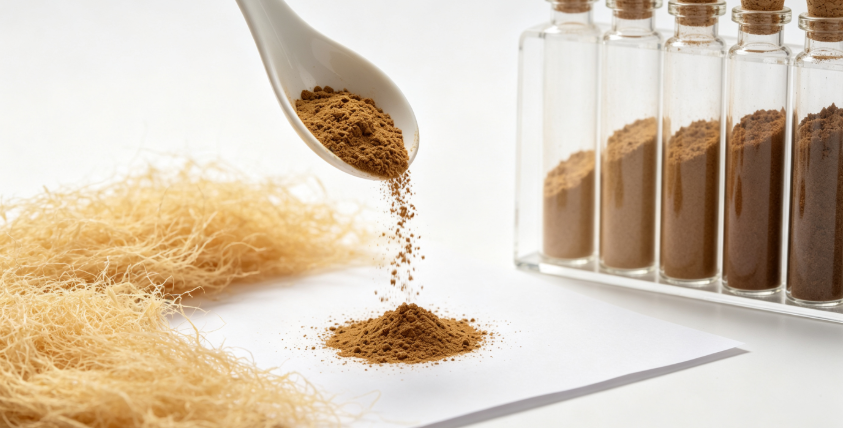
- Appearance, usually light brown to yellow, and a strong, characteristic odor. If it smells like nothing, ask why.
- Particle size, often 100 percent through 80 mesh. Loss on drying of 5 percent or less. Bulk density somewhere around 40 to 60 g per 100 ml.
- Heavy metals, pesticide residues and microbial results for every lot, not once a year.
- Packaging. Sealed, moisture proof, 25 kg drums are normal.
For a gynostemma leaf extract, also ask whether the same lot was used for the sample you tested. It sounds obvious, and it is surprising how often the answer is no.
One more point. Gynostemma powder, the dried and milled leaf, is a different product. It is milder and less concentrated and suits teas and dry blends, so don't swap it for an extract one for one. If a supplier says they can do any spec you like, thank them and move on.
Email three: "Capsule or tea stick, which grade?"
Buyer: We want a capsule, and maybe a tea stick later. Which grade fits?
Us: They are two different jobs.
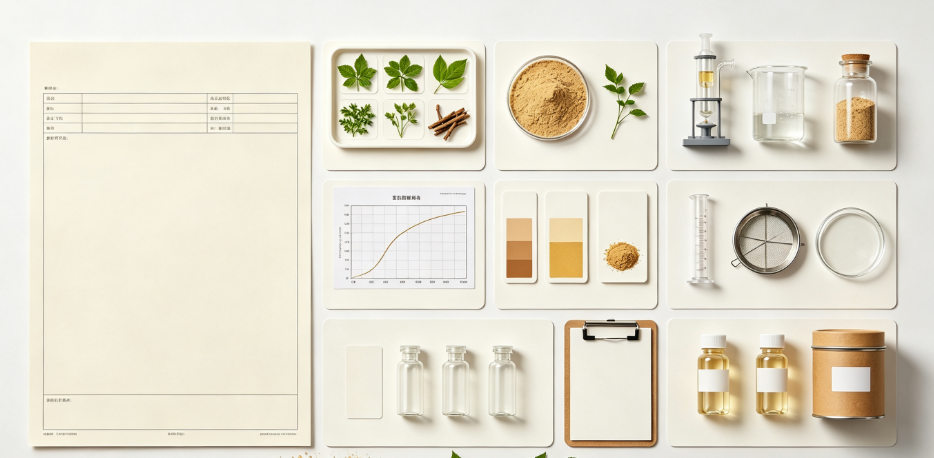
For capsules, choose a standardized grade with an HPLC assay, so the number on your label can be reproduced in an independent lab. Grades are sold from around 20 percent up to the high 90s, and ratio extracts such as 10:1 and 20:1 also exist. For tea sticks and drink mixes, a lower or mid grade usually works better, because the taste is strong and characteristic, so plan on flavor masking.
People ask us for the best gynostemma supplement, and our honest answer is boring. It is the one where the label number survives an independent test. That matters more than any name on the front of the box.
P.S. If you'd like to see what a documented lot looks like, ask our sales team for a COA and a small sample of our premium bulk gynostemma extract. We'll put the test method on the same page as the number, and quotes come from the same team.